
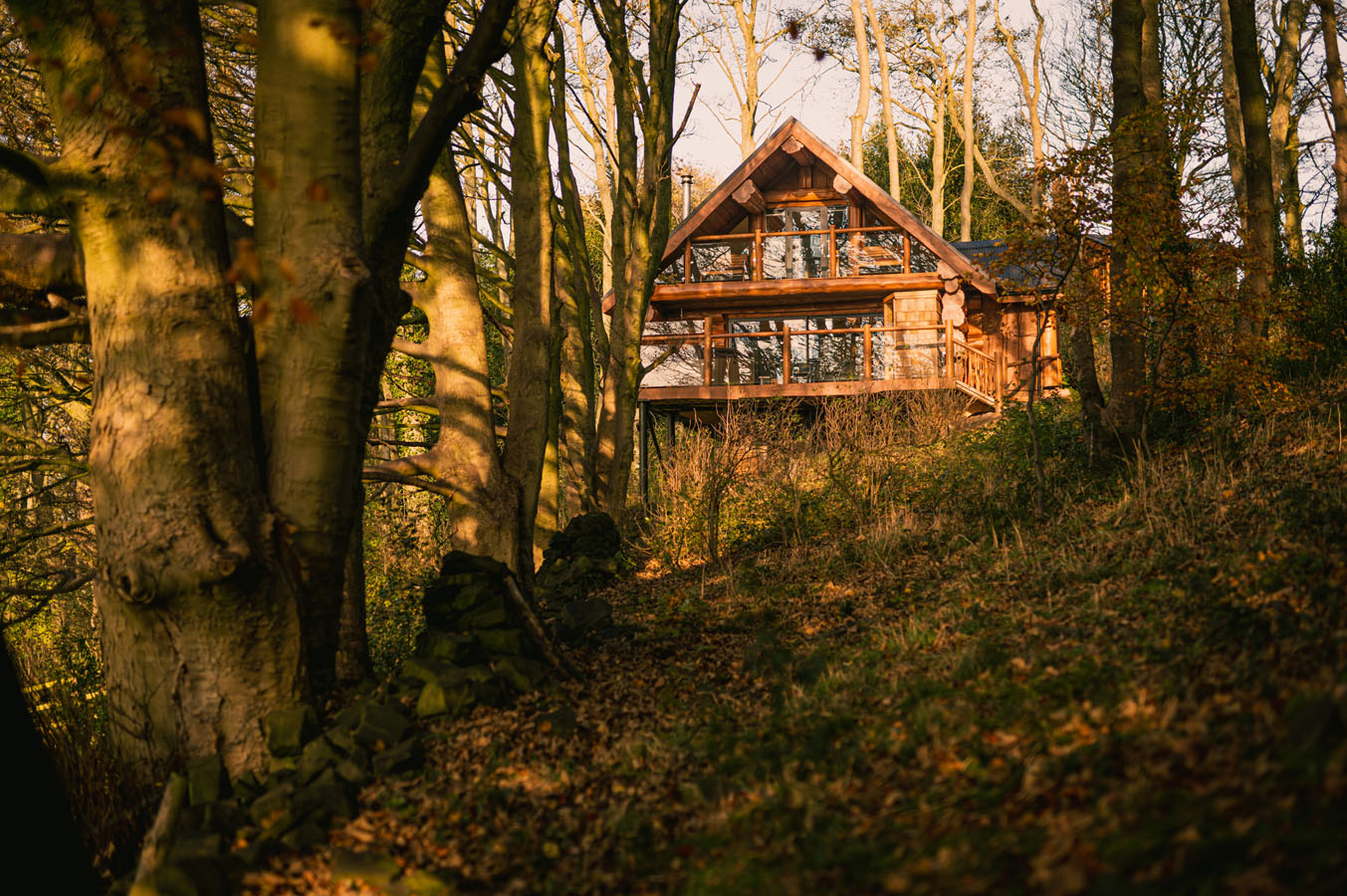
This project involved securing planning permission for a small cluster of high-quality log cabins set within a carefully managed woodland setting. Located within a World Heritage Site buffer zone, the scheme required a highly sensitive and considered approach to ensure the development responded appropriately to its context.
Site Context and Key Constraints
From the outset, the site presented a number of significant planning constraints. Its location within a World Heritage Site buffer zone required the proposals to preserve the wider setting and avoid any harm to the significance of the designated area. In addition, the woodland character of the site brought with it strict requirements around tree protection, ecology and landscape impact.

Tree Root Protection Areas were a defining factor in shaping the layout of the scheme. Rather than viewing this solely as a limitation, we used the existing tree structure as a framework for the design, ensuring the cabins sat lightly within the landscape and retained the character of the woodland.
Ecology considerations were also central to the proposal. The design and layout were informed by the need to protect habitats and minimise disturbance, while also offering opportunities for biodiversity enhancement. Alongside this, a detailed landscape-led approach ensured that the development would integrate seamlessly with its surroundings.
Planning Strategy and Design Approach
Our strategy focused on delivering a low-impact form of development that could be clearly justified within planning policy. The scale, siting and design of the cabins were carefully controlled to reduce visual impact and maintain the sense of openness and tranquillity associated with the site.
The use of natural materials and a restrained architectural approach allowed the cabins to blend into the woodland setting. By working with the grain of the landscape, rather than against it, the proposals were able to demonstrate a clear respect for the character of the area.
Tree constraints played a key role in defining the final layout. Positioning the cabins around Root Protection Areas not only safeguarded existing trees, but also created a more organic and varied arrangement across the site. This ultimately enhanced the overall quality and experience of the development.


Outcome
Planning permission was successfully secured for the log cabin development, demonstrating that carefully considered design can unlock opportunities even within highly constrained and sensitive locations.
The approved scheme provides a high-quality rural accommodation offer that sits comfortably within its woodland setting, preserving the character of the landscape while making positive use of the site. By responding proactively to constraints relating to heritage, trees, ecology and landscape, the development achieves a balanced and policy-compliant outcome.

This project highlights the value of a landscape-led approach to rural planning. Constraints such as tree protection and ecological sensitivity do not need to limit development. When approached strategically, they can help shape more distinctive, higher-quality schemes that are both policy compliant and environmentally responsive.


If you want to learn more about how Glamping development applications, download our free Guide below;
