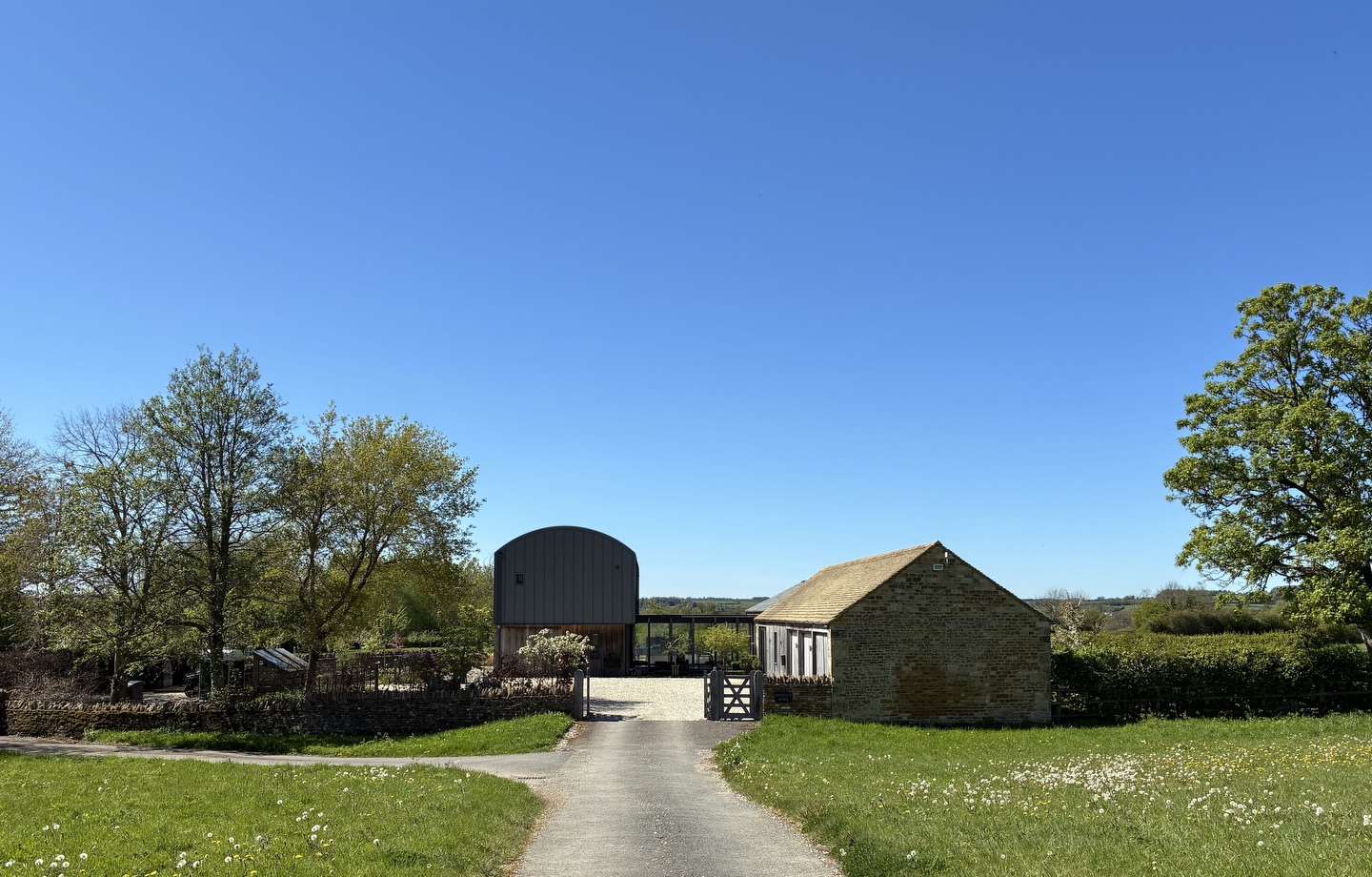
The changes to Class Q introduced through the 2024 amendments to the Town and Country Planning (General Permitted Development) (England) Order 2015 marked a clear shift in how agricultural buildings can be brought forward for residential use.
Current Position on Class Q
The transitional period for Class Q closed in May 2025, and all proposals must now align with the updated framework within the Town and Country Planning (General Permitted Development) (England) Order 2015. In practical terms, this has shifted the emphasis toward smaller units, with schemes driven by yield rather than floorspace.

Bamford Planning Ltd is experienced in delivering Class Q schemes across a range of rural contexts. From initial feasibility through to prior approval, the focus is on clear strategy, robust evidence and practical delivery, ensuring projects are positioned correctly to secure permission and maximise value for landowners and farmers. This note sets out the current position and how best to respond.
Keep reading to understand how the current Class Q legislation is being applied in practice, where the key risks now sit, and how to position a scheme to improve chances of success. A clear, informed approach at the outset can make a material difference to both the outcome and the overall delivery of the project.


Key Changes Now in Force
1. Updated Eligibility Date
Buildings must have formed part of an established agricultural unit on 24 July 2023.
This is a material shift from the previous “pre–20 March 2013” test and has widened the pool of potentially eligible buildings. This does still mean that you have to demonstrate that the building was part of an established agricultural unit and Local Planning Authorities are looking more closely at the evidence of agricultural use and unit status far more closely.
2. Established Agricultural Unit – Not Just Use
The requirement is no longer tied to purely agricultural use which is a welcomed change to the ‘old’ legislation and means equestrian, quasi domestic and other uses can be converted provided that it still forms part of an established agricultural unit.
This introduces flexibility, but also judgement. Evidence such as SBI numbers, land management activity, and old photographs all help in demonstrating that the building meets the criteria and are increasingly central to supporting applications.
3. Increase to 10 Dwellings


Up to 10 residential units can now be delivered under a single Class Q scheme.
This is a clear opportunity in strategic terms, particularly for larger farmsteads. That said, the increase in unit numbers is balanced by tighter controls on scale and form.
4. New Floorspace Parameters
The current position is:
- Maximum 150m² per dwelling
- Overall cumulative cap of 1,000m²
This effectively replaces the previous ability to deliver larger dwellings (up to 465m² under the old regime). As a result, schemes are now typically driven by unit yield rather than individual unit size.
5. Limited Operational Development
There is now allowance for a degree of operational development, including:
- Modest external wall build-ups (circa 200mm)
- Rear extensions (up to 4m, subject to criteria)
This is a positive change, particularly for steel portal frame buildings where insulation and envelope upgrades were previously constrained. However, LPAs continue to take a cautious approach, particularly where works begin to look more like rebuild than conversion.
6. Access Requirements
There must be suitable existing access to a public highway.
This has become a key point of refusal in some cases. It is no longer sufficient to rely on theoretical improvements — the access must function appropriately in its current form or with minimal intervention.


Position Following the End of Transitional Arrangements
The ability to rely on the previous Class Q regime ended on 20 May 2025.
This is significant because:
- Larger dwellings are no longer achievable under Class Q
- The focus has shifted toward smaller, policy-compliant units
- Early strategy work is now essential to determine whether Class Q remains the optimum route, or whether a full planning application may deliver better value
What This Means in Practice
From a delivery perspective, Class Q remains a strong tool for rural diversification, but it is now more nuanced.
There is a clear shift toward:
- Front-loaded feasibility work (planning, structural and access review)
- Optimising layout and unit mix rather than maximising floorspace
- Careful interpretation of “conversion” versus “rebuild”
- Evidence-led submissions, particularly around agricultural status and structural capability
In many cases, the question is no longer simply “does Class Q apply?”, but rather:
“Is Class Q the best route for this site?”
Summary
- The new Class Q regime is now fully in force following May 2025
- Buildings must relate to an established agricultural unit as of July 2023
- Up to 10 dwellings are permitted, subject to a 150m² per unit cap
- Overall development is limited to 1,000m²
- Greater flexibility is allowed, but with tighter scrutiny in practice
- Early feasibility and strategy work is now critical to success
If you are reviewing a site, the most effective approach is to test Class Q alongside alternative routes at the outset. Done properly, this allows the scheme to be positioned in the most straightforward and commercially robust way from day one.
Posts
Welcome to a world of limitless possibilities, where the journey is as exhilarating as the destination, and where every moment is an opportunity to make your mark.
-

The publication of the latest National Planning Policy Framework (NPPF) represents one of the most significant changes to the planning system in recent years. As the seventh full version of the NPPF since 2012, another update might not immediately seem remarkable, particularly to those of us now having to abandon well-worn paragraph references (again). However,…
-

What Developers and Landowners Need to Know The Government has announced a number of important changes to Biodiversity Net Gain (BNG), with new regulations laid before Parliament on 13 July 2026 and coming into force on 6 August 2026. These amendments are intended to reduce the burden on smaller developments, simplify parts of the BNG process,…
-

This project involved promoting a landowner’s site through the Local Plan process, seeking its allocation for future housing development. Site Context and Key Constraints The site was well related to existing settlement boundaries but had no formal allocation for development. Securing recognition in the emerging Local Plan required a robust evidence base addressing landscape, access,…